
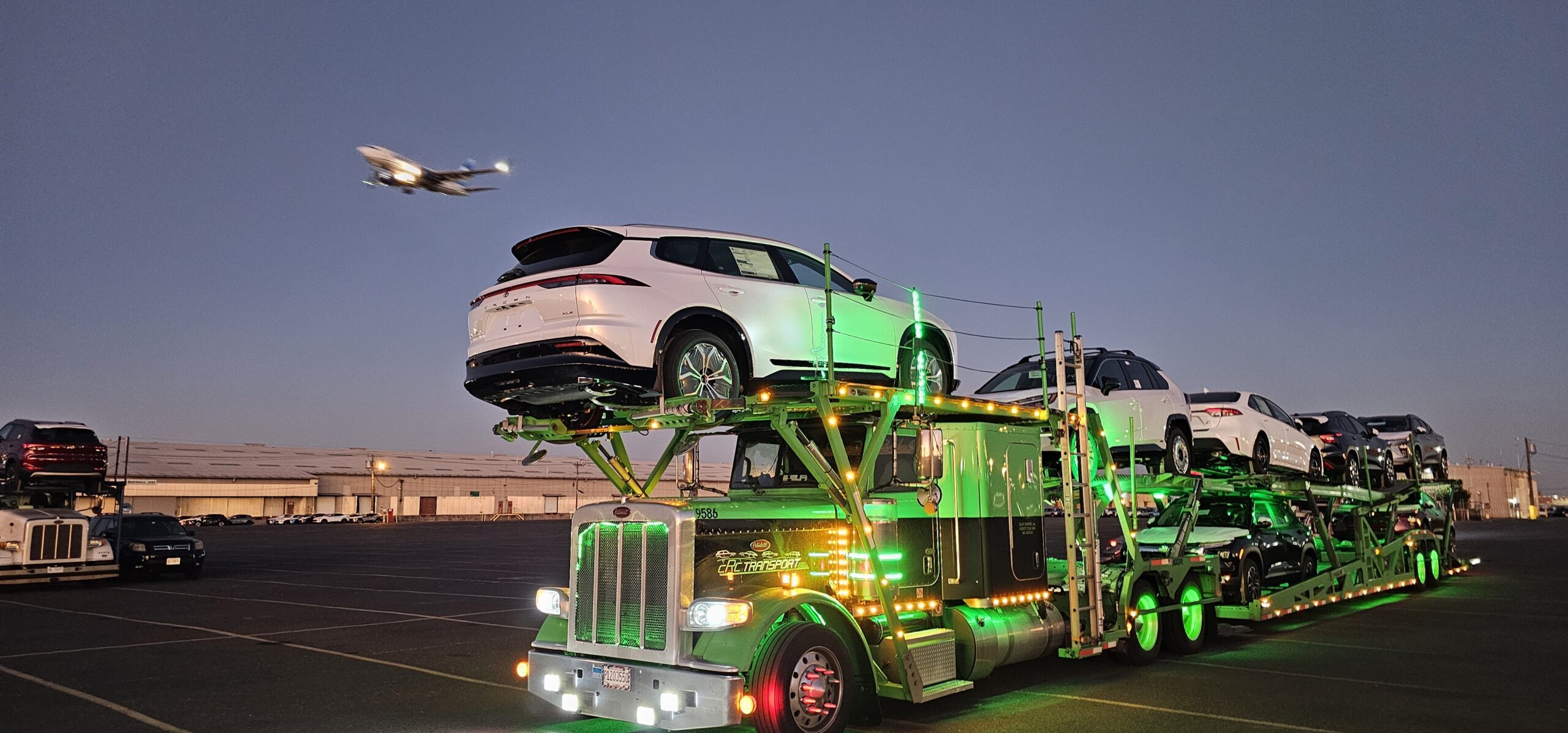
Electric Vehicle (EV) Transportation for OEM Programs

Overview: EV Logistics in OEM Supply Chains
Electric vehicles (EVs) introduce unique challenges in OEM logistics. Unlike internal combustion engine (ICE) vehicles, EVs require specialized handling due to high-voltage batteries, increased weight, and charging dependencies.
OEMs integrate EV transportation into existing plant-to-dealer and multi-leg distribution networks while maintaining risk mitigation, compliance, and delivery reliability. Transport partners are expected to align with EV-specific operational requirements, ensuring vehicle integrity and network efficiency.
OEMs integrate EV transportation into existing plant-to-dealer and multi-leg distribution networks while maintaining risk mitigation, compliance, and delivery reliability. Transport partners are expected to align with EV-specific operational requirements, ensuring vehicle integrity and network efficiency.
EV Handling and Safety Standards
Battery Safety and Transport Readiness
High-voltage battery systems pose potential safety risks if mishandled. OEMs mandate protocols for:
Pre-transport inspection of battery integrity
Secured battery management systems
Compliance with OEM-approved handling procedures
Vehicles are only dispatched once battery health and safety criteria are verified.
Charging State Requirements and Monitoring
State of Charge (SOC) requirements are critical for EV transport readiness. OEMs define acceptable SOC ranges to:
Prevent battery degradation during transport
Ensure vehicles are operational upon dealer delivery
Maintain safety margins during multi-leg or extended transport
Telemetry or manual verification of SOC is typically required before and during transit.
Fire Suppression and Emergency Protocols
EV transportation includes fire suppression awareness and emergency procedures. Drivers and carriers are trained to:
Respond to battery thermal events
Use OEM-approved emergency equipment
Follow defined isolation and reporting protocols
Specialized Equipment and Carrier Requirements
Transport Carrier Modifications for EVs
Carriers must be compatible with EV-specific requirements, including:
Load securement systems designed for battery weight and vehicle architecture
Ramps and tie-down points that prevent chassis or underbody damage
Securing High-Voltage Vehicles During Transit
Proper securement ensures EVs remain stationary without stressing battery or electrical systems. OEMs require standardized tie-down methods and spacing protocols to mitigate shock or vibration risks.
Equipment Inspection and Maintenance for EV Compatibility
EV compatibility requires regular carrier inspections and maintenance to prevent equipment failure. This includes ensuring ramps, tie-downs, and trailers remain within OEM tolerances for vehicle weight and battery safety.
Insurance and Risk Management for EV Transport
EVs are high-value assets, and insurance programs must reflect elevated risk:
Cargo and auto liability limits are higher than standard ICE vehicle transport
EV-specific claims procedures account for battery damage and specialized repair costs
Integration with damage prevention programs ensures proactive risk mitigation
EV Distribution in Plant-to-Dealer Programs
Staging and Yard Management for EVs
EVs often require separate staging areas in plant or regional yards with:
Adequate fire suppression and ventilation
SOC monitoring
Restricted access to reduce operational risk
Route Selection Considerations
Routes are selected with EV-specific factors in mind:
Weight and battery safety
Limited exposure to extreme temperatures
Avoidance of unnecessary stops that could impact SOC
Multi-Leg Distribution for EVs
EVs in multi-leg shipments require careful coordination between carriers, ensuring each leg maintains compliance, SOC stability, and securement standards.
Monitoring, Tracking, and Data Reporting
Telemetry and SOC Tracking
Real-time tracking includes GPS location, SOC, and vehicle condition. OEMs require automated or manual updates at key checkpoints to maintain operational visibility.
Real-Time Alerts and Exception Handling
Alerts for deviations in SOC, temperature, or transit conditions trigger predefined exception workflows. Transport partners must respond immediately to mitigate risk.
Integration with OEM ERP/TMS Systems
Tracking and reporting are integrated into ERP or TMS platforms for centralized visibility, analytics, and KPI monitoring. Standardized reporting ensures consistent data across multi-carrier networks.
Common Risks and Challenges in EV Transportation
Battery degradation or damage due to mishandling or environmental factors
SOC mismanagement leading to non-operational deliveries
Equipment or carrier non-compliance with EV-specific protocols
Multi-leg handling issues increasing exposure to damage
OEMs address these risks through standardized SOPs, proactive monitoring, and carrier training programs.
EV transport performance is measured using:
Damage rate per 1,000 vehicle
SOC compliance and monitoring adherence
Delivery timing and reliability
Audit and inspection outcomes
Carrier adherence to EV-specific handling protocols
These KPIs directly influence vendor qualification, capacity allocation, and long-term program participation.
SOC mismanagement leading to non-operational deliveries
Equipment or carrier non-compliance with EV-specific protocols
Multi-leg handling issues increasing exposure to damage
OEMs address these risks through standardized SOPs, proactive monitoring, and carrier training programs.
How OEMs Evaluate EV Transport Performance
EV transport performance is measured using:
Damage rate per 1,000 vehicle
SOC compliance and monitoring adherence
Delivery timing and reliability
Audit and inspection outcomes
Carrier adherence to EV-specific handling protocols
These KPIs directly influence vendor qualification, capacity allocation, and long-term program participation.
Frequently Asked Questions
How are EVs handled differently than ICE vehicles in OEM transport?
What are SOC requirements for EV shipments?
Are there specialized insurance policies for EVs?
How do multi-leg routes affect EV transport risk?