How OEMs Can Improve VIN-Level Visibility
How OEMs Can Improve VIN-Level Visibility
VIN-level visibility is no longer a reporting enhancement. It is a supply chain requirement.
In 2026, OEM logistics operations span production plants, ports, processing centers, rail ramps, long-haul carriers, regional hubs, and dealer networks. Without structured VIN-level tracking, vehicles become data blind spots between checkpoints.
Improving VIN-level visibility reduces delivery variance, shortens claims resolution time, improves dealer communication, and strengthens overall supply chain control.
Visibility at the unit level transforms logistics from estimated movement to measurable performance.
Why VIN-Level Visibility Matters
Tracking shipments at load level is no longer sufficient.
OEMs need to know:
- Where each vehicle is
- When it departed
- Expected arrival time
- Current transit status
- Inspection condition history
- Delay risk probability
VIN-level intelligence supports:
- Launch coordination
- Inventory allocation
- Floorplan exposure control
- Claims validation
- Dealer readiness planning
Precision drives stability.
1. Implement Real-Time GPS Tracking at VIN Level
True visibility begins with active tracking.
Best practice includes:
- GPS tracking tied to specific VINs
- Automated location updates
- Geo-fenced departure and arrival confirmation
- Predictive ETA modeling
Rather than tracking the carrier only, VIN-linked tracking ensures visibility even in multi-stop deliveries.
Predictive ETA accuracy reduces operational uncertainty.
2. Integrate Digital Condition Reporting
Condition transparency is part of visibility.
VIN-level digital condition reports should include:
- Time-stamped pickup inspections
- High-resolution photo documentation
- Geo-location verification
- Delivery confirmation records
- Claims annotation history
Digital documentation builds a traceable chain of custody.
Visibility includes condition status, not just movement.
3. Integrate Transport Data with ERP and TMS Platforms
Visibility must flow into existing systems.
OEMs should ensure:
- API compatibility with transport providers
- Real-time data synchronization
- Automated status updates
- Centralized dashboard access
- VIN-specific reporting capabilities
Data silos reduce visibility effectiveness.
Integration converts transport data into operational intelligence.
4. Reduce Manual Status Communication
Manual check calls and email updates create information gaps.
Automated alert systems should provide:
- Pickup confirmation notifications
- Transit progress updates
- Delay alerts
- Delivery confirmation
- Exception reporting
Proactive alerts reduce escalation cycles and internal workload.
Automation supports scale.
5. Establish VIN Lifecycle Tracking
Visibility should span the entire lifecycle.
Tracking stages include:
- Production release
- Port arrival
- Processing center handling
- Rail transfer
- Truck dispatch
- Dealer delivery
Each transition point should be time-stamped and recorded.
Lifecycle visibility reduces blind spots and enables performance benchmarking.
6. Analyze Historical VIN Data for Trend Identification
VIN-level data enables performance analytics.
OEMs can evaluate:
- Transit time by region
- Carrier consistency
- Seasonal variance
- Damage correlation by lane
- Processing dwell time
Data-driven adjustments improve long-term performance.
Without analytics, visibility remains observational rather than actionable.
7. Improve Dealer Portal Access
Dealers benefit from direct visibility.
Providing secure VIN-level access allows dealers to:
- View live status
- Plan recon scheduling
- Coordinate staffing
- Reduce inbound inquiries
Dealer transparency reduces operational friction and improves satisfaction.
8. Strengthen Claims Management Through Visibility
Claims disputes often arise from incomplete documentation.
VIN-level visibility provides:
- Before and after inspection comparison
- Timestamped custody tracking
- Digital proof of transfer
- Reduced liability ambiguity
Faster resolution protects margin and dealer relationships.
9. Use Predictive Risk Modeling
Advanced systems combine visibility with analytics.
Predictive modeling can identify:
- High-risk routes
- Potential delay probability
- Weather disruption impact
- Capacity bottlenecks
This transforms visibility from passive monitoring to proactive management.
Prediction narrows delivery variance.
10. Ensure Data Accuracy and Standardization
Visibility depends on clean data.
OEMs should standardize:
- VIN formatting protocols
- Status code definitions
- Inspection terminology
- Timestamp consistency
- Carrier reporting standards
Inconsistent data reduces reliability.
Data discipline is foundational.
VIN-Level Visibility Implementation Checklist
✔ GPS tracking linked to individual VINs
✔ Digital inspection reporting
✔ API integration with ERP and TMS
✔ Automated alerts and notifications
✔ Lifecycle stage tracking
✔ Dealer portal access
✔ Claims documentation integration
✔ Historical analytics review
Visibility must be structured, not fragmented.
The CRC Transport VIN-Level Framework
CRC Transport enhances VIN-level visibility through:
Real-Time Monitoring
- GPS tracking tied to VIN
- Predictive ETA updates
- Geo-fenced status confirmation
Digital Documentation
- Time-stamped condition reporting
- Photo verification
- Transparent claims workflow
Data Integration Support
- API-ready reporting
- Centralized dashboard visibility
- Lane performance analytics
This structured approach provides OEMs with measurable control across vehicle distribution networks.
FAQ: VIN-Level Visibility for OEMs
Why is VIN-level tracking better than load tracking?
Load tracking does not account for multi-stop sequencing or individual vehicle status changes.
Does VIN tracking increase operational complexity?
When integrated properly, it reduces manual communication and improves clarity.
Can dealers access VIN visibility directly?
Yes, through secure portals or integrated dealer systems.
Does VIN-level tracking reduce claims?
It reduces disputes by providing objective documentation.
What is the biggest challenge in implementing VIN visibility?
System integration and data standardization across partners.
Final Perspective
VIN-level visibility is the backbone of modern automotive logistics.
In 2026, supply chain performance depends on real-time transparency, digital documentation, and predictive analytics tied to each vehicle.
OEMs that invest in structured VIN-level tracking gain stronger control, reduced variance, improved dealer communication, and long-term operational resilience.
Reliable Experts in Automotive Transportation
Have any questions or wish to Schedule a pickup today?
Related Posts

CRC Transport, where speed meets reliability.
Our commitment to you is simple: when we promise, we deliver.When you choose us, you’re not just a client; you’re a valued partner.
Experience excellence with CRC Transport and start your journey today!

Merry Christmas and a Happy New Year filled with meaningful journeys and cherished milestones!
Every journey has a story, and every story carries a lesson.
This Christmas, CRC Transport celebrates the moments of reflection that help us rediscover what truly matters…

From Auction to Lot: Enhancing Vehicle Turnover with Smart Transport
For dealerships, time is money – especially when sourcing inventory from auctions. Whether you’re acquiring vehicles from in-state auctions or need to send car from state to state, every day a car isn’t on your lot is a missed sales opportunity.
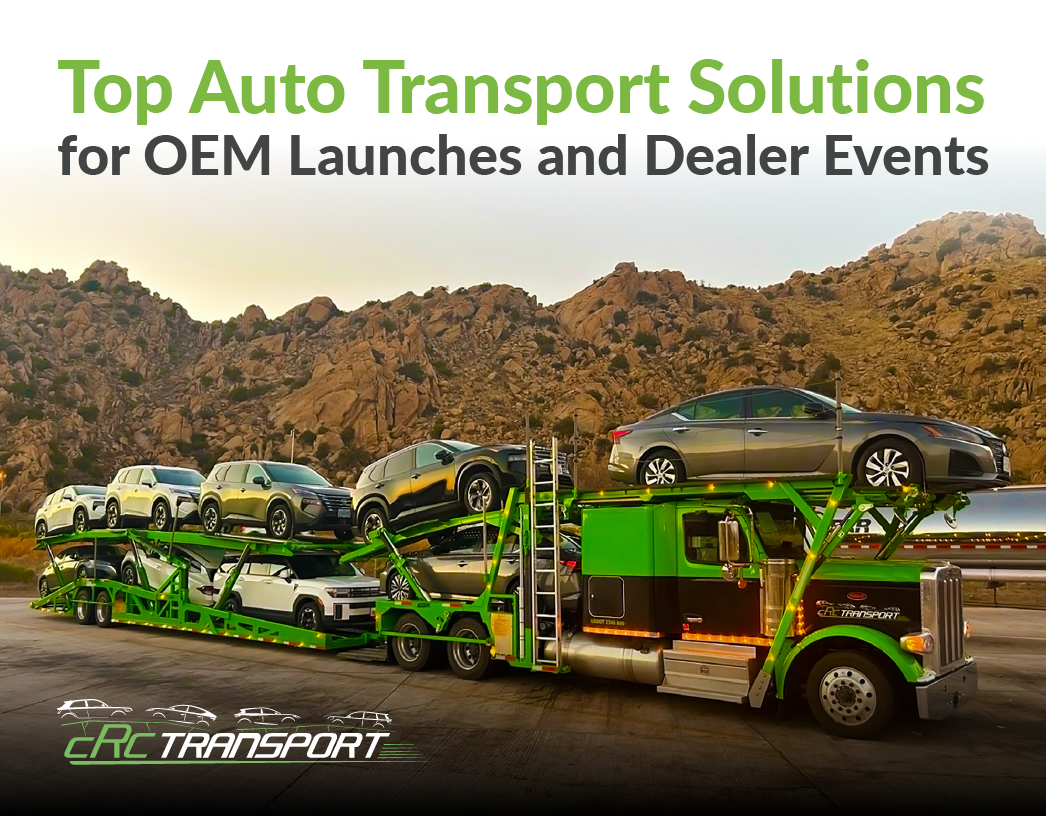
Transporting Test Drive Fleets: Efficient Solutions for OEM Programs and Dealerships
OEM test drive programs and dealership promotional events rely heavily on fast, efficient vehicle logistics. Whether you’re launching a nationwide tour, rotating fleet vehicles between stores, or deploying demo cars for media reviews, seamless transport services are essential to keeping your schedule on track and your vehicles road-ready.
