
Open vs Enclosed Transport for OEM Vehicle Distribution

Overview: Transport Mode Selection in OEM Logistics
For OEM vehicle distribution, the choice between open and enclosed transport is not a marketing preference but a strategic logistics decision. Transport mode selection affects cost structure, capacity planning, risk exposure, compliance requirements, and delivery timelines across plant-to-dealer and multi-leg distribution networks.
OEMs evaluate transport modes based on vehicle type, production volume, launch phase, and operational risk tolerance. While both open and enclosed transport are established options within the U.S. automotive supply chain, their use cases differ significantly when applied to large-scale OEM programs.
OEMs evaluate transport modes based on vehicle type, production volume, launch phase, and operational risk tolerance. While both open and enclosed transport are established options within the U.S. automotive supply chain, their use cases differ significantly when applied to large-scale OEM programs.
Open Transport in OEM Vehicle Distribution
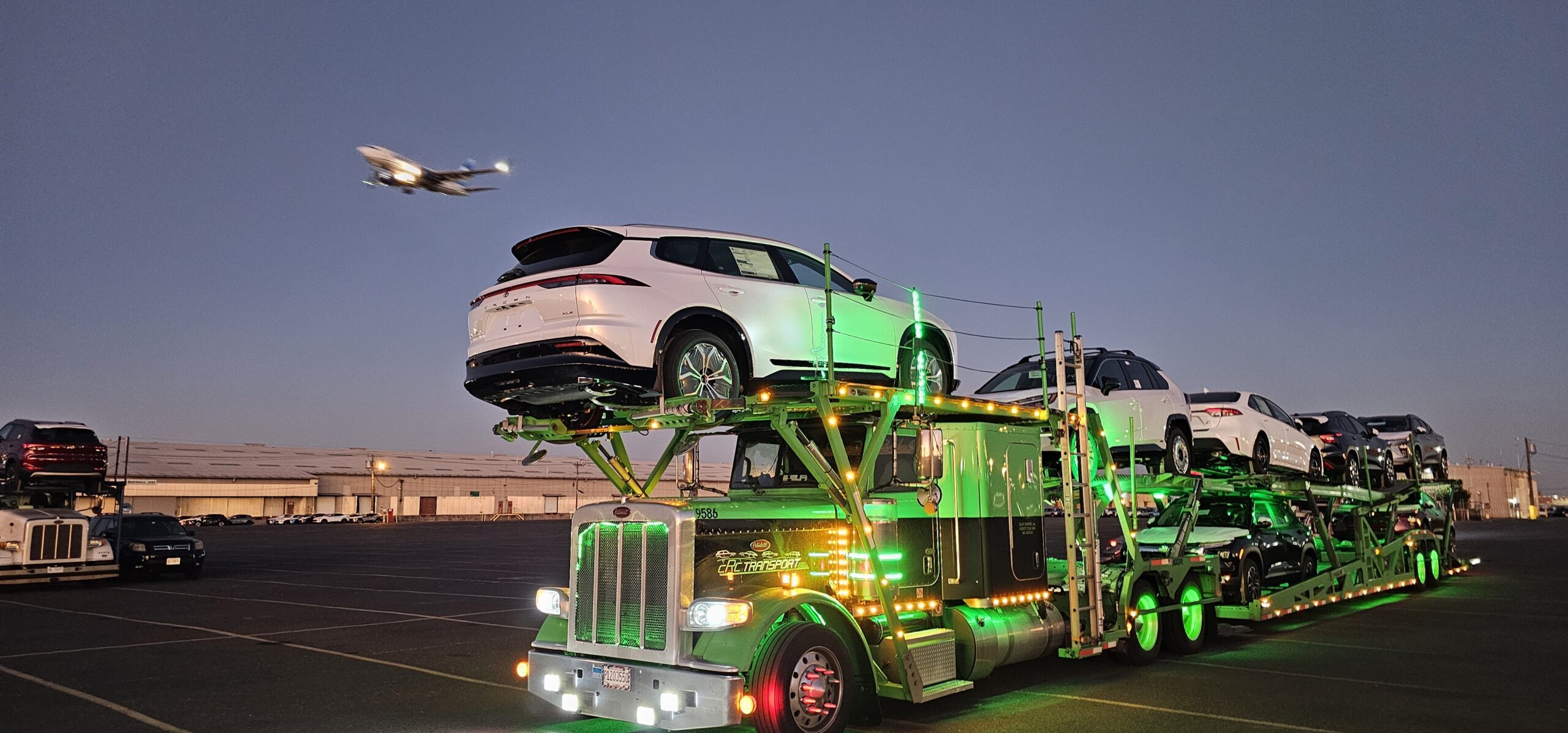
Open transport is the standard mode for high-volume OEM vehicle distribution in the United States. It is designed to support production-scale throughput, geographic coverage, and predictable capacity across regional and national routes.
OEMs rely on open carriers for plant releases, regional distribution, and dealer replenishment programs because this mode integrates efficiently with rail ramps, staging yards, and multi-leg logistics networks. Open transport supports consistent loading patterns, standardized securement methods, and rapid carrier interchange without disrupting downstream operations.
From a risk perspective, OEMs manage open transport exposure through standardized handling procedures, carrier qualification programs, insurance thresholds, and damage prevention protocols. When properly governed, open transport provides a balance between operational efficiency and controlled risk suitable for production vehicles, EVs, and fleet distribution.
OEMs rely on open carriers for plant releases, regional distribution, and dealer replenishment programs because this mode integrates efficiently with rail ramps, staging yards, and multi-leg logistics networks. Open transport supports consistent loading patterns, standardized securement methods, and rapid carrier interchange without disrupting downstream operations.
From a risk perspective, OEMs manage open transport exposure through standardized handling procedures, carrier qualification programs, insurance thresholds, and damage prevention protocols. When properly governed, open transport provides a balance between operational efficiency and controlled risk suitable for production vehicles, EVs, and fleet distribution.
Enclosed Transport in OEM Programs
Enclosed transport plays a limited but specific role in OEM logistics. It is typically reserved for vehicles requiring heightened protection due to sensitivity, confidentiality, or program phase rather than volume distribution.
OEMs may specify enclosed transport for prototype vehicles, pre-production units, executive vehicles, or early pilot program shipments where exposure risk must be minimized. Enclosed carriers reduce environmental exposure and visual access, supporting confidentiality and damage prevention during critical development or launch stages.
However, enclosed transport introduces constraints. Capacity is significantly lower, routing flexibility is reduced, and scalability across national dealer networks is limited. For these reasons, enclosed transport is rarely used for full production distribution and is instead applied selectively within tightly controlled OEM programs.
OEMs may specify enclosed transport for prototype vehicles, pre-production units, executive vehicles, or early pilot program shipments where exposure risk must be minimized. Enclosed carriers reduce environmental exposure and visual access, supporting confidentiality and damage prevention during critical development or launch stages.
However, enclosed transport introduces constraints. Capacity is significantly lower, routing flexibility is reduced, and scalability across national dealer networks is limited. For these reasons, enclosed transport is rarely used for full production distribution and is instead applied selectively within tightly controlled OEM programs.
Cost, Capacity, and Scalability Considerations
Transport mode decisions are directly tied to OEM cost models and capacity planning. Open transport offers superior scalability, enabling OEMs to move large volumes consistently across the U.S. without creating bottlenecks. This makes it suitable for sustained production output and dealer replenishment cycles.
Enclosed transport, while offering increased protection, carries higher per-unit costs and limited availability. OEMs factor these constraints into program budgets and typically restrict enclosed usage to vehicles where the operational or reputational risk outweighs cost considerations.
For OEMs managing mixed portfolios that include production vehicles, EVs, and prototypes, transport mode selection is often segmented by vehicle category rather than applied uniformly.
Enclosed transport, while offering increased protection, carries higher per-unit costs and limited availability. OEMs factor these constraints into program budgets and typically restrict enclosed usage to vehicles where the operational or reputational risk outweighs cost considerations.
For OEMs managing mixed portfolios that include production vehicles, EVs, and prototypes, transport mode selection is often segmented by vehicle category rather than applied uniformly.
Risk Management and Compliance Implications
From a compliance standpoint, both transport modes must meet OEM insurance, documentation, and reporting requirements. However, the risk profile differs.
Open transport relies heavily on process discipline, carrier training, and standardized inspection protocols to control exposure. Damage prevention programs, condition reporting, and claims workflows are designed around high-volume movement and statistical performance monitoring.
Enclosed transport shifts risk management toward prevention through isolation, reducing environmental and handling exposure but requiring stricter access control, scheduling discipline, and carrier oversight. OEMs expect enhanced documentation and real-time visibility when enclosed carriers are used, particularly for sensitive vehicles.
Open transport relies heavily on process discipline, carrier training, and standardized inspection protocols to control exposure. Damage prevention programs, condition reporting, and claims workflows are designed around high-volume movement and statistical performance monitoring.
Enclosed transport shifts risk management toward prevention through isolation, reducing environmental and handling exposure but requiring stricter access control, scheduling discipline, and carrier oversight. OEMs expect enhanced documentation and real-time visibility when enclosed carriers are used, particularly for sensitive vehicles.
Application Across OEM Distribution Scenarios
In production-scale plant-to-dealer distribution, open transport is the dominant and preferred mode. It aligns with rail integration, yard operations, and dealer network replenishment strategies.
During pilot programs, launch phases, or prototype movements, OEMs may temporarily shift to enclosed transport for specific vehicles while maintaining open transport for the broader distribution network. This hybrid approach allows OEMs to protect critical assets without disrupting overall supply chain efficiency.
For EV programs, open transport remains standard once vehicles enter production distribution, provided carriers meet EV handling, securement, and SOC monitoring requirements.
During pilot programs, launch phases, or prototype movements, OEMs may temporarily shift to enclosed transport for specific vehicles while maintaining open transport for the broader distribution network. This hybrid approach allows OEMs to protect critical assets without disrupting overall supply chain efficiency.
For EV programs, open transport remains standard once vehicles enter production distribution, provided carriers meet EV handling, securement, and SOC monitoring requirements.
How OEMs Decide Between Open and Enclosed Transport
OEMs do not evaluate transport modes in isolation. Decisions are based on vehicle classification, production phase, volume forecasts, risk tolerance, and network impact. Procurement and logistics teams assess whether the operational benefit of enclosed transport justifies its limitations, or whether standardized open transport with strict controls achieves the same objective at scale.
In most OEM programs, open transport is the foundation of vehicle distribution, while enclosed transport functions as a targeted tool, not a default solution.
In most OEM programs, open transport is the foundation of vehicle distribution, while enclosed transport functions as a targeted tool, not a default solution.
Frequently Asked Questions
Why do OEMs primarily use open transport for vehicle distribution?
When is enclosed transport justified in OEM programs?
Does enclosed transport eliminate damage risk?
Are EVs transported using open or enclosed carriers?