Optimizing Vehicle Distribution from Port to Dealer

Optimizing Vehicle Distribution from Port to Dealer
Optimizing vehicle distribution from port to dealer is one of the most critical stages in the automotive supply chain.
Once vehicles arrive at U.S. ports, financial exposure begins immediately. Port storage fees, dwell time, documentation processing, and inland transport coordination directly impact delivery speed and dealer inventory velocity.
In 2026 and beyond, OEMs must treat port-to-dealer distribution as a structured logistics discipline – not a secondary step after ocean freight.
Why Port Distribution Is Operationally Sensitive
Vehicles arriving at ports often face:
- High storage volume
- Processing backlogs
- Customs clearance variability
- Weather exposure
- Limited yard capacity
- Equipment scheduling constraints
Every additional day at port increases:
- Storage fees
- Capital exposure
- Delivery delay risk
- Dealer dissatisfaction
Speed and predictability at this stage directly influence downstream performance.
1. Reduce Port Dwell Time
Port dwell time is one of the largest hidden cost drivers.
To reduce dwell:
- Pre-assign inland carriers before vessel arrival
- Align customs documentation in advance
- Schedule yard pickup windows early
- Use digital status alerts for vessel ETA updates
Structured coordination between ocean logistics and inland transport reduces unnecessary staging delays.
2. Secure Dedicated Inland Capacity
Port congestion often creates capacity bottlenecks.
OEMs should:
- Forecast weekly port arrival volumes
- Reserve multi-vehicle carrier blocks
- Avoid overreliance on spot market dispatch
- Align equipment type with vehicle profile
Dedicated capacity reduces pickup lag and improves transit predictability.
3. Implement VIN-Level Visibility from Port Exit
Visibility should begin at the port gate.
Modern distribution models require:
- VIN-level GPS tracking
- Digital gate-out confirmation
- Electronic Bill of Lading documentation
- Time-stamped pickup records
Without structured tracking, port release transitions into blind transport risk.
Data continuity is essential.
4. Optimize Route Planning by Region
Port location influences inland routing strategy.
For example:
West Coast ports – distribution toward California, Nevada, Arizona, Texas
Southeast ports – distribution toward Georgia, Florida, Tennessee
Northeast ports – distribution toward Midwest and regional dealer networks
Strategic lane clustering reduces:
- Empty miles
- Transit variance
- Cost per unit
Route design should reflect dealer density and demand velocity.
5. Integrate Vehicle Processing Center Coordination
Some vehicles require:
- Software updates
- Accessory installation
- Quality inspection
- Market-specific modifications
Coordination between processing centers and carrier dispatch must be synchronized.
Unaligned scheduling leads to secondary delays and idle equipment time.
Process integration reduces friction.
6. Balance Rail and Truck Modal Strategy
Long-haul inland distribution may combine:
- Rail transport from port to regional hub
- Truckload auto carriers for final-mile dealer delivery
Rail provides cost efficiency for long distances.
Truck transport provides flexibility and delivery precision.
Hybrid modal strategies reduce congestion and balance cost versus speed.
7. Manage Damage Risk at Port Facilities
High-volume port yards increase exposure to:
- Tight maneuvering space
- Multiple handling touchpoints
- Weather impact
- Storage stacking density
Digital condition reporting at:
- Vessel discharge
- Port yard release
- Inland carrier pickup
reduces claim disputes and establishes clear accountability.
Documentation continuity protects OEM and dealer margin.
8. Forecast Volume Peaks and Seasonal Variability
Import volumes often spike during:
- Model year transitions
- Promotional campaigns
- Incentive launches
- EV production scaling
Capacity forecasting should anticipate:
- Equipment shortages
- Driver availability constraints
- Yard congestion
Reactive dispatching increases variance and cost.
Proactive planning stabilizes throughput.
9. Align Delivery Windows with Dealer Demand
Dealer groups expect predictable arrival windows.
Optimized port-to-dealer distribution should:
- Segment delivery waves
- Align with regional sales velocity
- Reduce yard overflow at dealerships
- Improve recon scheduling
Speed without coordination creates operational bottlenecks at the retail level.
Predictability supports inventory turnover.
10. Monitor Performance Metrics
OEM logistics teams should track:
✔ Average port dwell time
✔ Gate-out to delivery transit duration
✔ Delivery variance range
✔ Damage frequency during port transfer
✔ Capacity utilization
✔ Storage cost trends
Continuous performance review transforms port distribution from reactive to optimized.
The CRC Transport Port Distribution Model
CRC Transport supports OEM inland distribution with:
Structured Port Pickup Planning
- Pre-scheduled carrier blocks
- Volume forecasting
- Equipment allocation
Real-Time Visibility
- VIN-level GPS tracking
- Digital condition documentation
- Predictive ETA alerts
Risk Mitigation
- Claims transparency
- Weather-aware routing
- Reduced handling touchpoints
This structured framework supports consistent inland distribution from major U.S. ports to dealer networks across key automotive markets.
FAQ: Port to Dealer Vehicle Distribution
Why is port dwell time expensive?
Storage fees accumulate quickly, and extended staging increases financial exposure.
Is rail always better for long distances?
Rail can be cost-effective for long-haul, but truck transport offers greater flexibility.
How can OEMs reduce congestion risk?
By pre-securing capacity and aligning arrival schedules with inland routing plans.
Does digital tracking begin at the port?
It should. Gate-out visibility ensures shipment continuity.
What is the biggest risk at port facilities?
Handling variability and dwell time delays that disrupt downstream distribution.
Final Perspective
Optimizing vehicle distribution from port to dealer requires coordination, forecasting, digital visibility, and disciplined capacity planning.
In 2026, inland logistics performance directly influences dealer satisfaction, inventory turnover, and OEM brand reliability.
Port distribution is not simply a transition point – it is a strategic control point in the automotive supply chain.
Reliable Experts in Automotive Transportation
Have any questions or wish to Schedule a pickup today?
Related Posts
Leveraging Real-Time Tracking for Smarter Vehicle Management
In today’s logistics-driven automotive world, real-time tracking has become a defining advantage for dealerships and fleet managers. Whether you’re managing car transportation services from state to state or optimizing auto transport long distance routes, visibility is everything. Real-time updates empower clients to monitor every stage of the delivery process, ensuring vehicles arrive safely and on […]
Open vs Enclosed Auto Transport – Strategic Decision Guide
Open vs enclosed auto transport is not simply a pricing decision. It is a risk management decision.
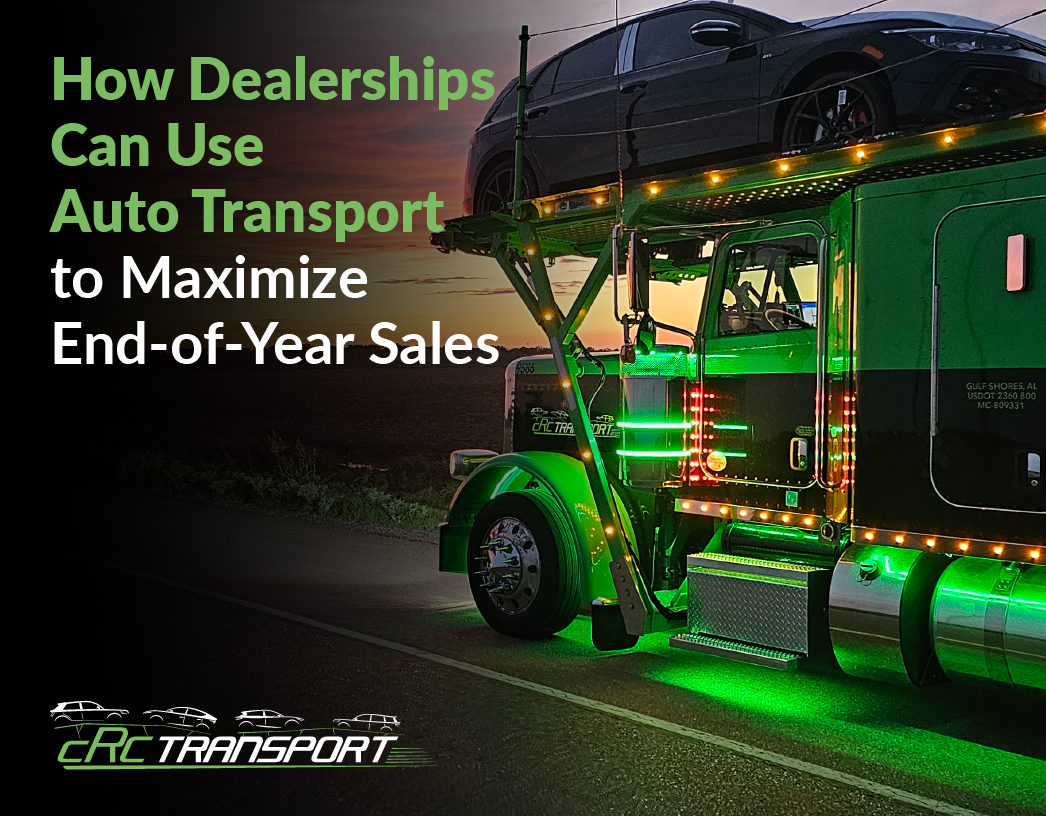
How Dealerships Can Use Auto Transport to Maximize End-of-Year Sales
As the year winds down, dealerships face high-stakes challenges: clearing inventory, avoiding unsold year‑end models, and turning slow stock into sales gold. One often-overlooked tool in achieving these goals is smart use of auto transport.
Why Consistent Carrier Performance Matters More Than Lowest Rates
In today’s fast-paced automotive market, dealerships must balance cost-efficiency with reliability when transporting vehicles. While it may be tempting to choose the cheapest option, prioritizing low rates over service quality can result in delays, damaged vehicles, and lost customer trust. Ensuring a steady, dependable flow of inventory depends on working with car transporting company partners […]
