
Weather Risk Mitigation in Cross-Country Vehicle Shipping
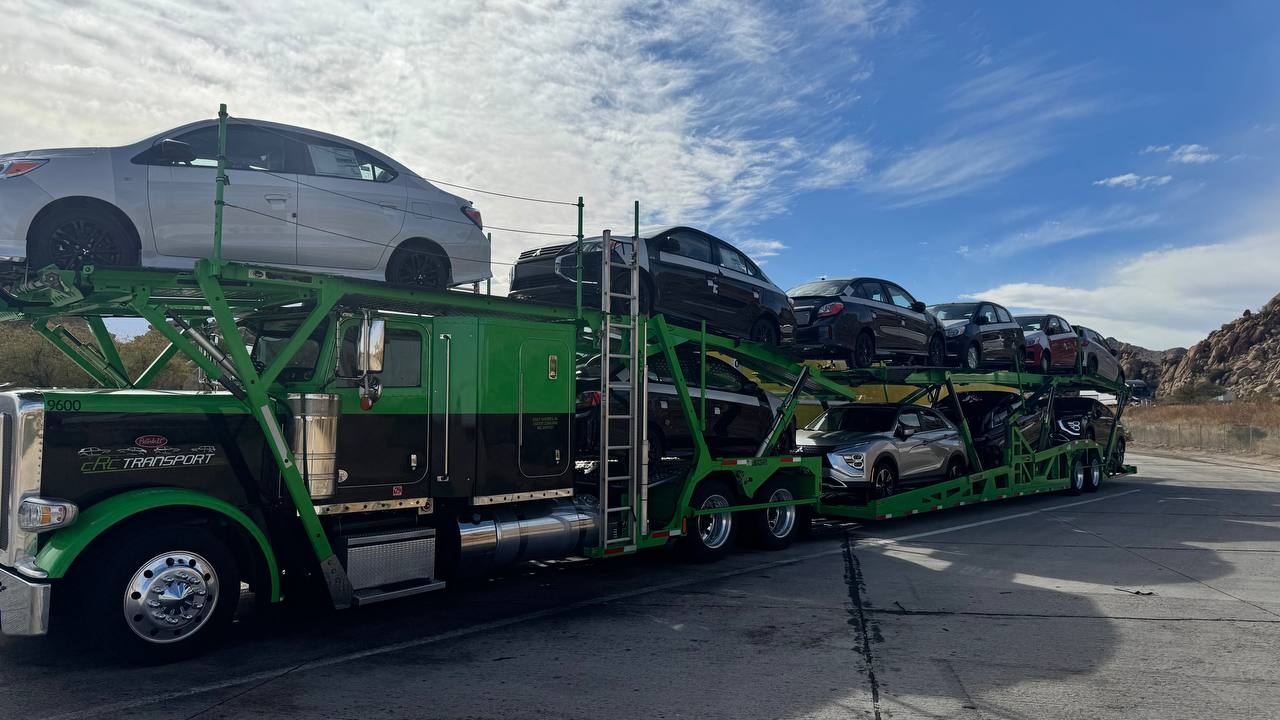
Weather Risk Mitigation in Cross-Country Vehicle Shipping
Weather risk mitigation in cross-country vehicle shipping is a core operational discipline, not a contingency afterthought.
In 2026, automotive distribution networks span thousands of miles across varied climate zones, including snow-prone northern corridors, hurricane-exposed coastal states, desert heat regions, and mountainous terrain. Severe weather events increase delivery variance, damage exposure, and compliance risk.
Effective mitigation requires forecasting, route discipline, equipment alignment, and real-time visibility.
Uncontrolled exposure increases cost and disrupts dealer operations.
Why Weather Risk Is Increasing
Cross-country shipments encounter:
- Winter storms in northern corridors
- Ice and road salt exposure
- Hurricane season in Gulf and Southeast regions
- Flooding events
- Extreme desert heat in Southwest states
- Wildfire-related route closures
- High wind restrictions on open carriers
As climate variability intensifies, weather volatility becomes more frequent and less predictable.
Proactive planning reduces operational disruption.
1. Use Predictive Weather-Based Route Optimization
Traditional routing focuses on distance and cost.
Weather-adjusted routing evaluates:
- Forecasted storm systems
- High wind advisories
- Flood risk zones
- Mountain pass closures
- Ice-prone highways
Predictive models allow dispatchers to:
- Reroute in advance
- Adjust departure timing
- Avoid high-risk corridors
Proactive rerouting reduces both delay and damage probability.
2. Adjust Equipment Strategy Seasonally
Equipment selection impacts exposure level.
During severe conditions, OEMs and dealers may consider:
- Enclosed carriers for high-value units
- Lower deck positioning for debris protection
- Reduced load height in high wind corridors
- Seasonal equipment allocation planning
Equipment alignment should reflect regional climate risk.
Protection must match exposure.
3. Plan for Seasonal Congestion and Regulatory Delays
Weather often triggers:
- State-imposed travel restrictions
- Weight limit adjustments
- Road closures
- Chain requirements
- Speed regulation enforcement
Capacity planning should account for:
- Reduced travel speed
- Extended transit windows
- Surge demand following closures
Buffer scheduling prevents cascading delays.
4. Monitor VIN-Level Shipments in Real Time
Real-time visibility reduces uncertainty during severe weather.
VIN-level tracking enables:
- Route deviation detection
- Idle time monitoring
- Predictive ETA adjustments
- Early communication with dealers
When disruption occurs, proactive updates reduce frustration and allow operational adjustment.
Visibility minimizes surprise.
5. Protect Vehicles From Environmental Exposure
Weather-related cosmetic risks include:
- Road salt corrosion
- Hail damage
- Wind-blown debris
- Flood exposure
Preventive strategies include:
- Enclosed transport for sensitive units
- Weather-adjusted routing
- Avoiding high-risk staging zones
- Limiting idle yard exposure
Environmental risk mitigation protects both vehicle condition and brand integrity.
6. Coordinate Port and Rail Operations During Storm Season
Coastal ports are particularly vulnerable to:
- Hurricane disruption
- Flooding
- Dock closures
- Labor slowdowns
Mitigation includes:
- Pre-scheduled inland capacity
- Rapid release procedures
- Alternate routing corridors
- Temporary volume redistribution
Upstream weather events can cascade into inland delay.
Cross-functional coordination reduces backlog.
7. Evaluate Insurance Exposure During Severe Conditions
Weather-related claims often involve:
- Multi-vehicle incidents
- Environmental damage
- Delayed settlement timelines
Transport contracts should clarify:
- Force majeure provisions
- Liability thresholds
- Claims documentation standards
Insurance alignment protects financial exposure during unpredictable events.
8. Use Historical Climate Data for Lane Planning
Past data reveals patterns such as:
- Recurrent winter bottlenecks
- Hurricane season impact corridors
- Flood-prone highways
- Heat-related mechanical strain regions
Analytics enable long-term corridor risk profiling.
Historical insight supports predictive capacity allocation.
9. Communicate Proactively With Dealer Networks
Dealer satisfaction depends on clarity.
During severe weather events:
- Provide updated ETAs
- Explain routing adjustments
- Confirm vehicle status
- Offer contingency scheduling
Transparent communication reduces operational friction.
Information stability offsets environmental instability.
10. Build Flexibility Into Capacity Planning
Weather disruption often causes demand compression after closures lift.
Capacity strategy should allow:
- Flexible surge capacity
- Multi-state rerouting options
- Additional equipment access
- Short-term corridor rebalancing
Resilience depends on adaptability.
Rigid capacity models fail under volatile conditions.
Weather Risk Mitigation Checklist
✔ Weather-adjusted route planning
✔ Seasonal equipment allocation
✔ VIN-level real-time tracking
✔ Port and rail coordination planning
✔ Insurance alignment review
✔ Historical climate data analysis
✔ Proactive dealer communication
✔ Flexible surge capacity
Prepared networks absorb disruption more effectively.
The CRC Transport Weather Mitigation Framework
CRC Transport mitigates cross-country weather risk through:
Predictive Routing
- Climate-adjusted corridor planning
- Dynamic rerouting capability
- Seasonal performance analysis
Real-Time Oversight
- VIN-level GPS monitoring
- Exception alerts
- Predictive ETA recalculation
Risk Control
- Digital condition documentation
- Equipment alignment
- Capacity flexibility
This structured approach protects delivery predictability and vehicle condition across diverse U.S. climate zones.
FAQ: Weather Risk in Vehicle Shipping
Can weather-related delays be completely avoided?
No, but predictive planning significantly reduces disruption impact.
Does enclosed shipping eliminate weather risk?
It reduces exposure but does not eliminate transit delay risk.
Which corridors face highest weather volatility?
Northern winter routes and Gulf Coast hurricane corridors.
How does real-time tracking help during storms?
It allows proactive communication and dynamic route adjustment.
What is the biggest mistake in weather planning?
Treating severe weather as a rare exception rather than a recurring operational variable.
Final Perspective
Weather risk mitigation in cross-country vehicle shipping requires structured forecasting, equipment alignment, predictive routing, and real-time transparency.
In 2026, climate volatility is a permanent operational factor.
OEMs and dealer groups that integrate weather analytics into capacity planning reduce delivery variance, protect vehicle condition, and maintain supply chain resilience across expanding national networks.
Reliable Experts in Automotive Transportation
Have any questions or wish to Schedule a pickup today?
Related Posts
How Door-to-Door Transport Simplifies Dealership Operations
Efficient vehicle logistics are essential for dealerships aiming to maintain smooth operations and meet customer expectations. Traditional terminal-to-terminal shipping often adds unnecessary steps, requiring dealers to coordinate multiple pickups and drop-offs. Door-to-door auto shipping provides a modern solution, allowing dealerships to move vehicles directly from one location to another without intermediate handling. The Advantages of […]
How Delays at Auctions Affect Dealer Profit – And How Smart Logistics Prevent It
For most dealerships, auctions are the backbone of their used-car inventory pipeline. But while auctions are fast-paced on the bidding side, the logistics that follow can be surprisingly slow — and these delays have a direct, measurable impact on dealer profitability. Every hour a vehicle sits at an auction instead of moving toward your lot […]
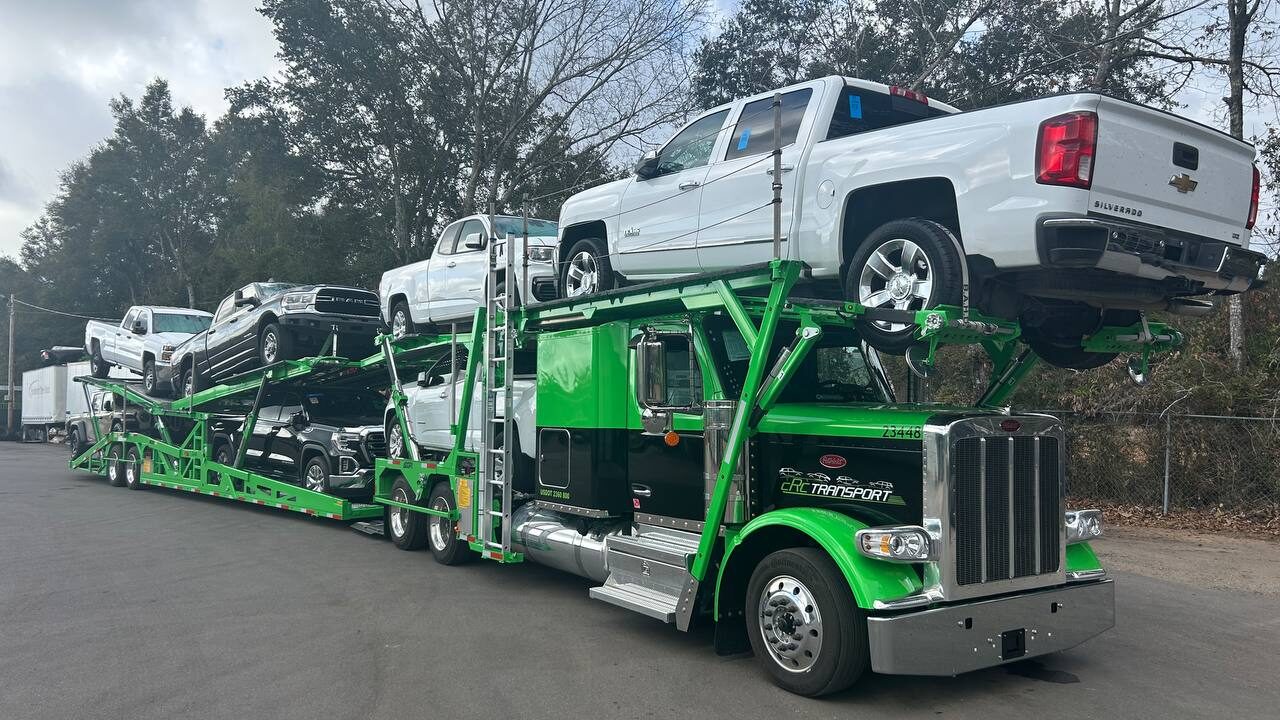
How Real-Time Tracking Transforms Car Transport Efficiency for Dealers and OEMs
In today’s dealership and OEM logistics landscape, visibility is no longer a luxury — it’s a baseline requirement. Delays, miscommunication, and unclear ETAs cost teams both time and money, impacting sales, production timelines, and customer expectations. Real-time tracking has emerged as one of the most transformative tools in the auto transport industry, giving businesses complete […]

Putting the ‘team’ in teamwork at CRC Transport!
Putting the ‘team’ in teamwork at CRC Transport!
A day on the greens to unwind and bond – because our synergy is just as important as the miles we cover.
Here’s to the camaraderie that keeps our wheels turning smoothly! 🏌️♂️
