
Reducing Delivery Variance in Automotive Logistics
Reducing Delivery Variance in Automotive Logistics
Reducing delivery variance in automotive logistics is more important than reducing average transit time.
In 2026, OEMs and high-volume dealership groups operate on synchronized production schedules, marketing launches, recon workflows, and sales forecasting. When delivery timelines fluctuate unpredictably, operational stability breaks down.
Delivery variance, not speed alone, drives:
- Floorplan exposure
- Dealer dissatisfaction
- Inventory imbalance
- Launch disruption
- Claims risk
The goal is not just fast delivery. The goal is predictable delivery.
What Is Delivery Variance
Delivery variance refers to the gap between planned transit time and actual delivery time.
For example:
Planned delivery: 5 days
Actual delivery: 3 days or 8 days
Both early and late arrivals can create operational friction.
High variance creates:
- Scheduling inefficiency
- Labor misalignment
- Yard congestion
- Missed retail opportunities
Stability supports margin.
1. Establish Lane-Based Planning Instead of Transactional Dispatch
One of the primary causes of variance is treating each shipment as a separate transaction.
Structured lane planning includes:
- Historical transit time analysis
- Seasonal delay mapping
- Carrier performance scoring
- Regional risk assessment
When lanes are defined and monitored consistently, variance narrows.
Predictable lanes outperform reactive dispatch models.
2. Use Predictive Route Optimization
Static distance-based routing increases unpredictability.
Modern logistics planning incorporates:
- Weather forecasting
- Traffic congestion data
- Construction zones
- Historical disruption patterns
Predictive routing selects the lowest-risk corridor rather than simply the shortest path.
Route consistency reduces delivery fluctuation.
3. Secure Dedicated Capacity for High-Volume Lanes
Spot market dependence increases variance.
Dedicated or pre-scheduled capacity:
- Reduces pickup delays
- Stabilizes departure timing
- Ensures consistent equipment availability
- Prevents last-minute re-routing
High-volume dealer groups and OEM corridors benefit from structured carrier partnerships.
Capacity predictability improves delivery predictability.
4. Implement VIN-Level Tracking and Real-Time Alerts
Lack of visibility amplifies variance impact.
VIN-level tracking enables:
- Predictive ETA updates
- Early detection of delays
- Proactive communication with dealers
- Exception management before escalation
Visibility reduces uncertainty even when minor variance occurs.
Early alerts allow operational adjustment.
5. Reduce Handling Touchpoints
Multiple transfers increase delay probability.
Variance often increases when vehicles:
- Move through multiple hubs
- Experience yard staging
- Require secondary transfers
Direct long-haul routing reduces handling complexity.
Fewer touchpoints reduce timing inconsistency.
6. Align Delivery Waves with Dealer Operations
Variance is more disruptive when delivery timing does not align with dealership readiness.
Coordination should include:
- Recon scheduling
- Staffing allocation
- Charging readiness for EVs
- Marketing launch timelines
A vehicle arriving outside planned windows creates operational friction even if transit time is technically shorter.
Consistency supports workflow stability.
7. Monitor Seasonal and Environmental Risk
Certain corridors experience predictable seasonal variance due to:
- Snow conditions
- Hurricane exposure
- Extreme heat
- Mountain pass restrictions
Planning adjustments may include:
- Alternate routing during winter months
- Scheduling buffers in storm seasons
- Equipment adjustments for climate exposure
Anticipating disruption reduces unexpected fluctuation.
8. Analyze Historical Variance Data
Performance analytics should measure:
- Average delivery time
- Standard deviation by lane
- Carrier-specific consistency
- Claim frequency correlation
Reducing variance is measurable.
When analytics reveal unstable lanes, corrective action may include:
- Carrier reassignment
- Route adjustment
- Capacity rebalancing
- Inspection protocol enhancement
Data drives stability.
9. Improve Port and Processing Coordination
For import units, port dwell time and processing center delays often increase delivery variance.
Mitigation strategies include:
- Pre-scheduled inland carrier allocation
- Digital gate-out documentation
- Coordinated vehicle processing timelines
- Volume forecasting alignment
Port inefficiency cascades into inland unpredictability.
Upstream coordination reduces downstream variance.
10. Integrate Logistics Data with Retail Performance Metrics
Delivery variance directly impacts:
- Inventory turnover
- Floorplan cost
- Sales forecasting accuracy
- Dealer satisfaction
Integrated analytics between transport systems and dealer systems provide:
- Real-time inventory readiness visibility
- Improved planning accuracy
- Reduced reactive adjustments
Supply chain alignment improves stability.
Delivery Variance Reduction Checklist
✔ Define and monitor core lanes
✔ Secure dedicated carrier capacity
✔ Use predictive routing models
✔ Implement VIN-level real-time tracking
✔ Minimize transfer touchpoints
✔ Monitor seasonal risk patterns
✔ Analyze variance metrics monthly
✔ Coordinate closely with dealer operations
Consistency is a strategic asset.
The CRC Transport Approach to Reducing Variance
CRC Transport reduces delivery variance through:
Structured Lane Management
- Historical performance analysis
- Risk-adjusted routing
- Seasonal planning adjustments
Dedicated Capacity Alignment
- Multi-vehicle load optimization
- Cross-state carrier coordination
- Equipment forecasting
Real-Time Oversight
- VIN-level GPS tracking
- Predictive ETAs
- Proactive exception alerts
This structured framework stabilizes distribution performance across major U.S. automotive corridors.
FAQ: Delivery Variance in Automotive Logistics
Is faster delivery always better?
Not necessarily. Predictability is often more valuable than occasional speed.
What causes the most delivery variance?
Capacity shortages, weather disruption, and unstructured dispatching.
How can dealers measure variance?
By tracking planned vs actual delivery time across defined lanes.
Does consolidation reduce variance?
Yes. Structured multi-vehicle planning improves scheduling consistency.
Can analytics truly reduce unpredictability?
Yes. Historical lane data and predictive modeling significantly narrow variance ranges.
Final Perspective
Reducing delivery variance in automotive logistics is about control, visibility, and structured planning.
In 2026, supply chain performance is defined not by occasional speed but by consistent execution.
OEMs and dealer groups that prioritize stability over reactive dispatching gain stronger operational alignment, improved margin protection, and long-term distribution reliability.
Reliable Experts in Automotive Transportation
Have any questions or wish to Schedule a pickup today?
Related Posts

Handling Overflow Inventory with Short-Term Transport Contracts
Balancing inventory across multiple rooftops isn’t always simple – especially when unexpected surpluses occur. Seasonal demand shifts, OEM allocations, and trade-ins can leave dealers with overflow inventory that needs to be repositioned quickly. Relying on short-term transport contracts helps dealerships avoid costly delays and keep vehicles moving to locations where they’re needed most. Why Short-Term […]
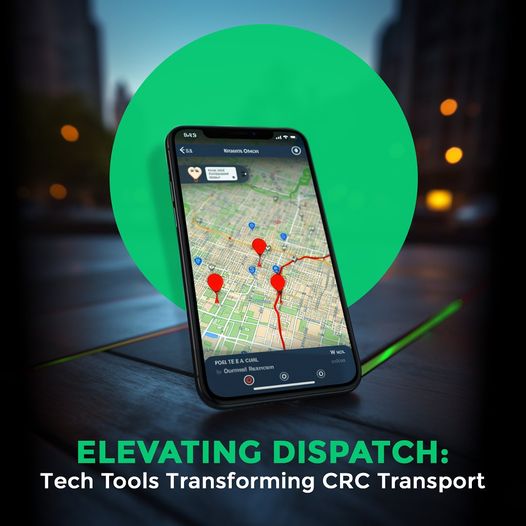
Elevating Dispatch: tech tool
At CRC Transport, we’re all about staying ahead of the curve when it comes to technology adoption.
The Hidden Costs of In-House Vehicle Transfers vs. Professional Transport Services
Auto dealerships are often tempted to move inventory using their own staff and trucks, thinking it will save money. But when you take a closer look at the hidden costs involved in in-house vehicle transfers, the numbers tell a different story. In many cases, using professional transport companies is not only more efficient but also […]
Why Inventory Turnover Depends on Transport Efficiency – A Dealer’s Guide
For dealerships, inventory turnover is one of the most important performance metrics. Every additional day a vehicle stays off the lot increases holding costs, delays reconditioning, slows sales velocity, and impacts profitability. While dealers focus heavily on acquisitions, pricing, and merchandising, one factor often gets overlooked: transport efficiency. The time between purchasing a vehicle and […]
