OEM Vehicle Distribution from Plant to Dealer Network

Understanding OEM Vehicle Distribution in the U.S. Market
OEM vehicle distribution in the United States is a structured logistics system designed to move newly manufactured vehicles from production plants to dealer networks in a controlled, scalable, and risk-managed manner. Unlike consumer delivery models, OEM distribution is tightly aligned with production planning, inventory strategy, and dealer allocation rules.
Plant-to-dealer distribution is not a single transportation event. It is a multi-stage process involving release authorization, yard management, transportation execution, and dealer coordination. Each stage introduces operational dependencies that must be managed to maintain flow efficiency and vehicle condition.
OEMs treat vehicle distribution as an extension of manufacturing operations rather than a standalone transportation function.
Plant-to-dealer distribution is not a single transportation event. It is a multi-stage process involving release authorization, yard management, transportation execution, and dealer coordination. Each stage introduces operational dependencies that must be managed to maintain flow efficiency and vehicle condition.
OEMs treat vehicle distribution as an extension of manufacturing operations rather than a standalone transportation function.
Key Stages of OEM Vehicle Distribution
Vehicle Release from Manufacturing Plants
The distribution process begins with vehicle release from the manufacturing plant. Release timing is governed by production completion, quality clearance, and allocation logic tied to dealer demand.
Vehicles are not released randomly. OEMs sequence releases to optimize transport efficiency, balance regional inventory, and reduce downstream congestion.
Staging, Yard Operations, and Dwell Time Management
After release, vehicles are staged at plant-adjacent or regional yards. Yard operations play a critical role in OEM distribution by acting as buffers between production output and transportation capacity.
Dwell time management is a key performance metric. Extended yard dwell increases inventory costs, congestion risk, and exposure to damage or environmental factors. OEMs actively monitor dwell times to maintain throughput across the distribution network.
Transportation from Plant to Dealer Network
Transportation execution connects production and retail operations. OEMs rely on structured transport programs to move vehicles from plants or yards to dealer locations within defined delivery windows.
This stage requires coordination between production planners, yard managers, and transportation providers to ensure capacity aligns with release volumes.
Transportation Modes Used in OEM Distribution
Truck Transport in OEM Dealer Distribution
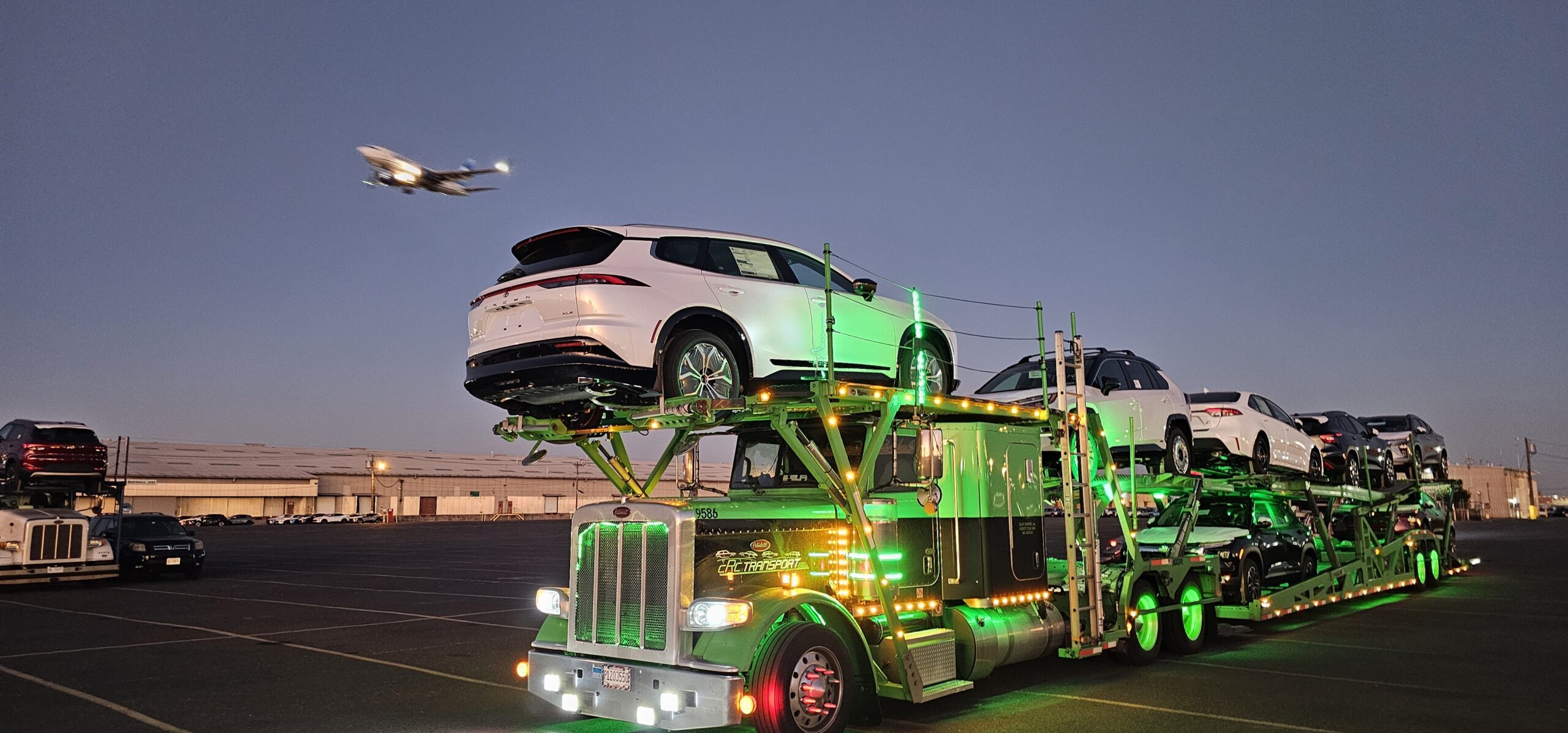
Truck transport is the primary mode used for final delivery to dealer locations. It offers flexibility in routing, scheduling, and delivery sequencing across diverse dealer networks.
Open transport is the standard for high-volume OEM distribution due to its scalability and alignment with production-driven flows.
Rail and Multi-Leg Distribution Models
For long-distance and high-density corridors, OEMs often incorporate rail into the distribution network. Rail transport is typically combined with truck moves to form multi-leg distribution models.
Multi-leg distribution introduces additional handoffs, requiring strict documentation, visibility, and accountability across each transfer point.
Port-to-Dealer Distribution for Imported Vehicles
Imported vehicles enter the distribution network through U.S. ports before moving to dealers or regional yards. Port operations add layers of complexity, including customs clearance, port dwell, and coordination with inland transport providers.
OEMs design port-to-dealer flows to minimize congestion and maintain consistent delivery timelines.
Operational Requirements in Plant-to-Dealer Transport
Scheduling and Production Alignment
OEM distribution schedules are directly tied to production output. Transportation planning must reflect production cadence, model mix, and regional allocation priorities.
Misalignment between production and transport capacity leads to yard congestion, delayed dealer deliveries, and network inefficiencies.
Volume Forecasting and Capacity Planning
Accurate volume forecasting underpins effective OEM distribution. Transport partners are expected to support forecast-based capacity planning rather than reactive, ad-hoc execution.
Capacity planning becomes especially critical during model launches, production ramps, and seasonal demand shifts.
Dealer Delivery Windows and Coordination
Dealers operate within defined delivery windows that reflect staffing, yard space, and retail readiness. OEMs coordinate deliveries to align with dealer constraints and minimize disruption to dealer operations.
Missed delivery windows create downstream inefficiencies and erode dealer confidence in the distribution network.
Visibility, Tracking, and Data Flow
Real-Time Status Visibility Across the Distribution Chain
OEMs require continuous visibility across plant release, yard staging, transportation, and dealer delivery. Status updates support operational planning and proactive exception management.
Visibility systems must be reliable, standardized, and capable of supporting high-volume data flows.
Exception Management and Disruption Handling
Disruptions such as weather events, capacity shortages, or production changes require structured exception management. OEMs expect transport partners to communicate issues early and support mitigation strategies.
Clear escalation protocols reduce the operational impact of disruptions across the dealer network.
Damage Prevention and Quality Control in Distribution
Inspection Points Across the Distribution Network
OEM distribution networks rely on standardized inspection points at plant release, yard transfers, and dealer delivery. Consistent inspections establish condition accountability and reduce dispute risk.
Inspection data is central to quality control and claims management processes.
Damage Accountability Across Multiple Handoffs
Multi-leg distribution introduces shared responsibility for vehicle condition. OEMs define accountability frameworks to ensure damage attribution remains clear across handoffs.
Transport partners are evaluated on their ability to maintain condition integrity throughout the distribution chain.
Special Considerations for EV Distribution
EV Handling and Storage at Plants and Yards
Electric vehicles require specific handling and storage practices related to battery safety, charging infrastructure, and environmental exposure.
OEMs define EV-specific procedures to ensure vehicles remain transport-ready without compromising battery health.
Charging State and Transport Readiness
OEM distribution programs often specify acceptable state-of-charge ranges for EVs prior to transport. Maintaining transport readiness requires coordination between plant operations, yard management, and transport providers.
Common Challenges in OEM Vehicle Distribution
OEMs routinely manage challenges such as yard congestion, capacity mismatches, seasonal dealer demand fluctuations, and complexity introduced by multi-leg distribution models.
Distribution requirements are designed to reduce these risks through standardized processes, performance monitoring, and partner alignment.
OEMs optimize distribution networks by standardizing workflows, integrating transport partners into planning processes, and prioritizing reliability over short-term cost savings.
Effective plant-to-dealer distribution supports inventory balance, dealer satisfaction, and overall supply chain stability.
Distribution requirements are designed to reduce these risks through standardized processes, performance monitoring, and partner alignment.
How OEMs Optimize Plant-to-Dealer Distribution
OEMs optimize distribution networks by standardizing workflows, integrating transport partners into planning processes, and prioritizing reliability over short-term cost savings.
Effective plant-to-dealer distribution supports inventory balance, dealer satisfaction, and overall supply chain stability.
Frequently Asked Questions
What is included in OEM vehicle distribution?
Why do OEMs use multi-leg distribution models?
How do OEMs reduce dwell time in distribution yards?
Are EVs distributed differently than internal combustion vehicles?